MBL Microbial Diversity Summer Course

I spent this past summer at the MBL Microbial Diversity summer course and I’ve written a post about it which can be found here: http://microbe.net/2015/09/28/mbl-microbial-diversity-summer-course/

While at the course, I also cultured a handful of microbes from seagrass leafs/roots and several different amoeba from seagrass bed sediments including one really cool “follow the leader” snail slime like amoeba (slime mold?).

Visualizing Microbiome Data: Choropleth Style

Hannah Holland-Moritz's avatarA Pipette and an Open Mind

Recently I’ve needed to visualize spatial changes in my microbiome data that are easily interpretable by other people. The best solution I’ve come across is simply projecting the data onto a drawing of my organism. Like this:

Zostera marina high resolution Alpha diversity of samples from pieces of a seagrass plant projected onto a drawing of that plant.

I’ve used SitePainter to produce these in the past, and in some ways it’s great. I got the figure I wanted and I’ve received a lot of positive feedback about it. The only problem is it has a steep learning curve and is the most dysfunctional GUI I’ve ever come across (generating the figure above took several days of my time, the first time). So when it became necessary to produce over forty more images like it I decided to search for a better way.

My first instinct was that there should be an easy way…

View original post 694 more words

ASM Highlights

The Seagrass Team (Hannah, Jenna & I) hit up ASM this year which was in New Orleans. In case you missed ASM, Jonathan took the effort to compile all the tweets together (#ASM2015) and his efforts can be found: here.

However in case you don’t want to wade though thousands of tweets I’ve included some some brief highlights:

NCBI’s Targeted Loci Blast (MOLE-BLAST)

  • Using MOLE-BLAST you can blast specific 16S or ITS sequences against NCBI currated databases for those marker genes. This seems like it could be really useful if you want to identify bacterial or fungal taxonomy using a marker gene approach. Also, MOLE-BLAST appears to use a tree based approach to help you find the nearest neighbor for taxonomy assignment.

Carl Zimmer’s Talk on Microbiomes and the Hyperbolome

The Session that kept Redefining the Tree of Life (aka Unearthing the Dark Matter of Microbial Metabolism and Diversity)

  • Unfortunately, I missed this session, but apparently both Brett Baker (@archaeal) and Laura Hug (@LAHug_) shook things up
  • Brett Baker brought Thorarchaeota to the party, a monophyletic group that looks like it branches between Lokiarchaeota and Eukaryotes
  • Then Laura Hug showed up with Woesearchaeota and Pacearcheoata, not sure where they fit in, but cool

Contributions to “Extreme” Microbiology by Female Scientists Session

  • The whole session was awesome (and extreme), but Emmie de Wit gave a heartfelt (and tear producing) talk on being a first responder to the Ebola outbreak in Liberia
  • Also, I now really want to go to the Bonneville Salt Flats that Betsy Kleba talked about

Honorable mentions: John Zehr (Talk on open ocean Nitrogen fixing symbionts), David Baltrus (Talk on fungal endophytes with bacterial symbionts in their hyphae), Michael Wagner (Talk on syntrophy between nitrite and ammonia oxiders and alternative substrates for nitrification), Tom Marshburn (A real life astronaut!), Tom Sharpton (A Shotgun Metagenome Annotation Pipeline (ShotMAP))

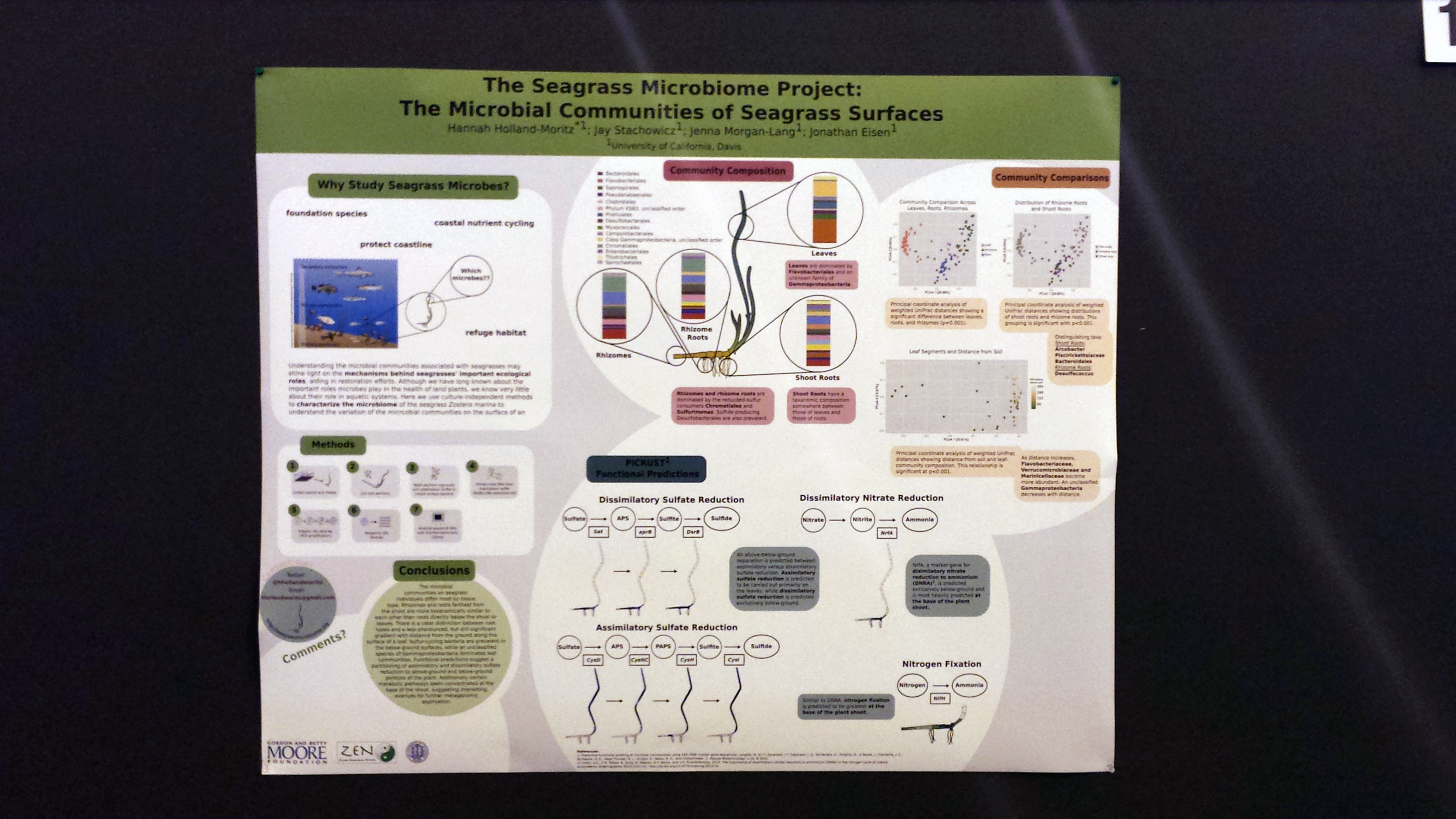
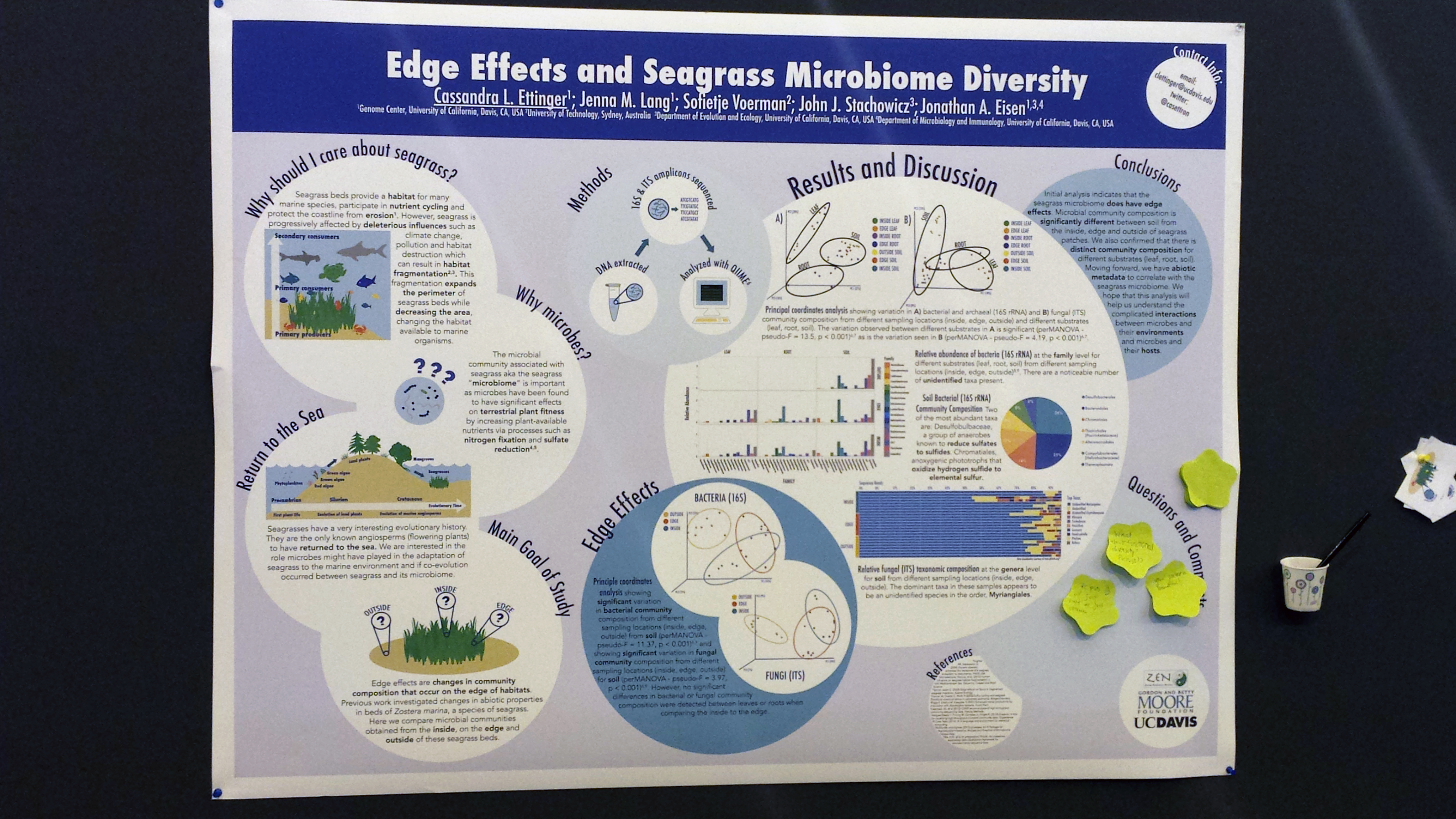
Hannah and I presented posters at the meeting, her poster (left, #1237) and my poster (right, #1236) can be seen below:

20150601_162116 20150601_162124

Of course, Team Seagrass wasn’t the only ones from the Eisen lab presenting at ASM. David Coil (@davidacoil), Srijak Bhatnagar (@srijakbhatnagar) and Megan Krusor (@MKrusor) also presented posters this year! See tweets with photos below.

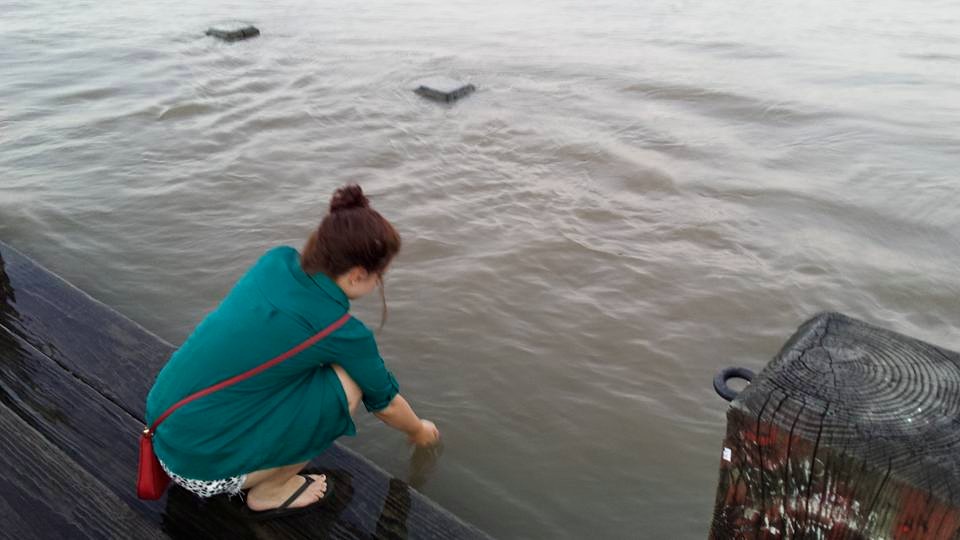
Some might say that the real highlight of ASM was New Orleans itself; it was my first time there and I really enjoyed being immersed in the culture (the music!), city and food (especially the food). Below is a picture of me touching the Mississippi River (my first time!). Unfortunately, the water was too murky to search for any seagrass or seagrass relatives.

11391124_10205818157466724_2465408434093120848_n

Potomac Samples: not what we expected, but still some interesting connections

Last summer I went on a sampling expedition to the Chesapeake Bay for some SAV (submerged aquatic vegetation) collection. I came back with leaf and root samples from the Potomac River from a few different SAV species. Ideally, we thought the microbial community would correlate with the salinity gradient across the sites or the host species.

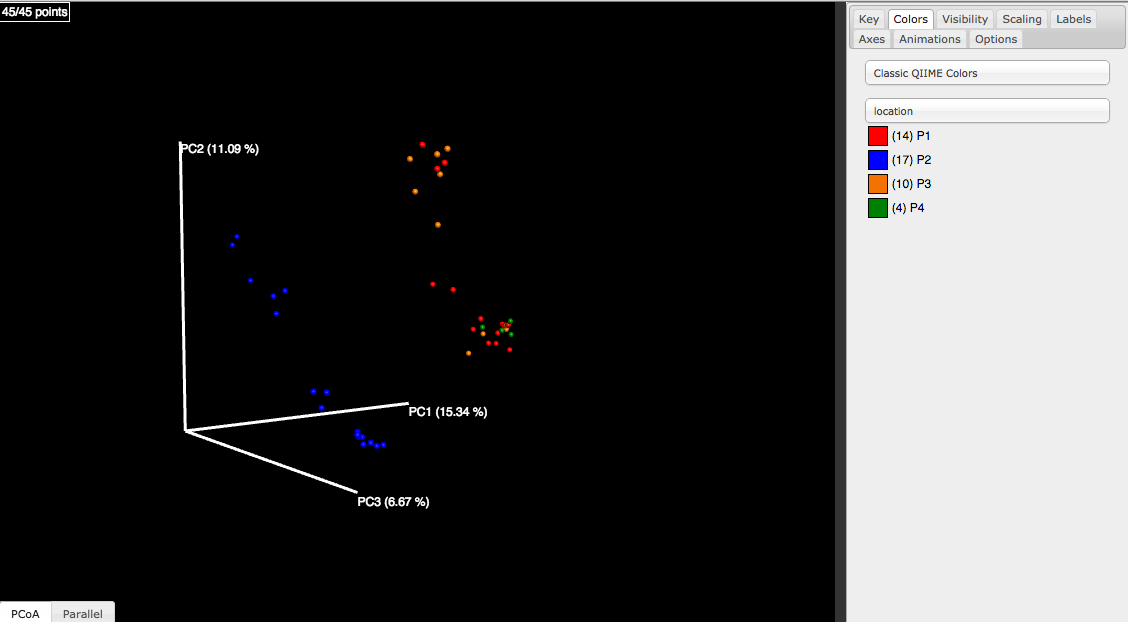
Neither of those patterns are discernible in this data set as far as the beta diversity plots are concerned, but I found some other interesting things while sifting through these plots. For instance, the samples cluster based on the site location (P1-P4). The communities at P1 and P3 look really similar and P4 is within the tail end of their cluster, while P2 is totally different. location

For reference, here’s a map of our sites:

Screen Shot 2015-06-05 at 11.21.11 AM
Whitehead, Andrew et al. “Genomic Mechanisms of Evolved Physiological Plasticity in Killifish Distributed along an Environmental Salinity Gradient.” Proceedings of the National Academy of Sciences of the United States of America 108.15 (2011): 6193–6198. PMC. Web. 5 June 2015.

Although all the sites were visited, I only found SAV species at P1-4. There are some useful patterns in the water and soil chemistry data (courtesy of Greg Mayer from Texas Tech University) that show the same correlation pattern as the site locations (as expected since each location has its own distinct chemistry data). Some of the chemistry data shows different patterns from site location, so I’ll have to sift through those next and see what looks relevant. I also ran a core microbiome script for each site, but haven’t looked at the output yet.

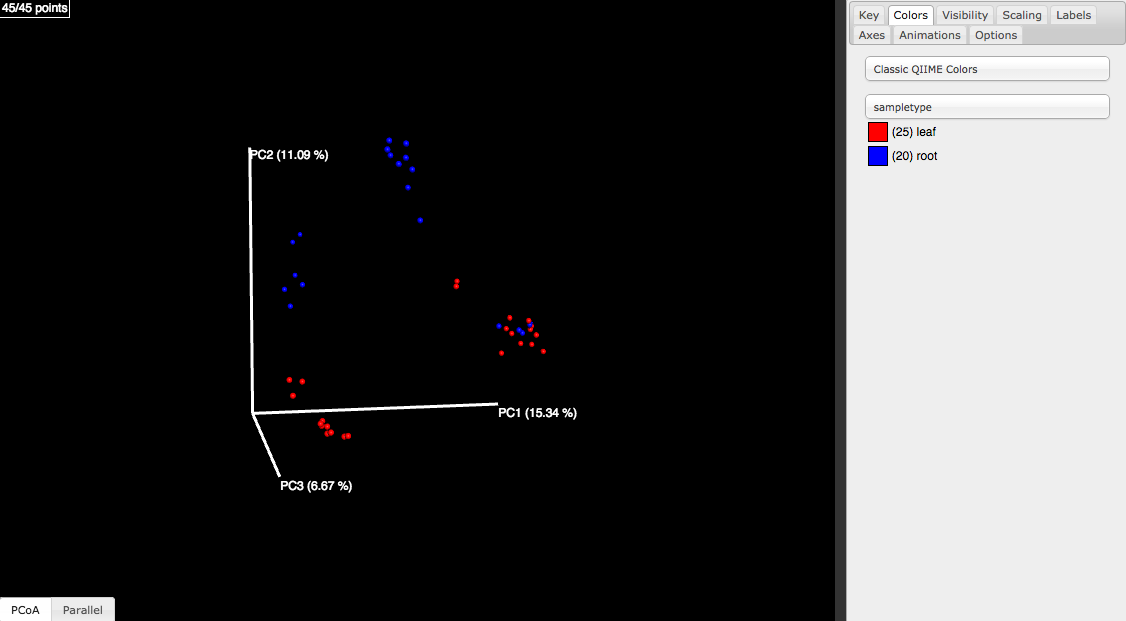
In addition, the leaf and root samples are pretty distinct:

sampletype

The alpha diversity graphs are a whole ‘nother beast that I’m going to explore some other time. That’s all for now, but I feel that there are some interesting lines of investigation to pursue and more scripts to run.

A first look at the first ZEN run

PNAs (blockers for mitochondrial and chloroplast amplification)

  • More organelles were filtered from the leaves than the roots, sediment, or water.
average % loss by sample type
Leaf 26.5518607264
Root 10.6381529905
Sediment 5.1730348426
Water 13.0591363787
  • using PNAs did not result in an overall loss of reads
# filtered reads
PNA 389011
no PNA 411059
  • in progress: do we see more chimeras with PNA use?

Run summary statistics

    • 533 samples, including kit controls and PNA tests
    • reads per sample (after filtration) ranged from 5 – 206,661
    • the kit control with the most reads had 6549
    • 306 (57.4%) of the samples had fewer than 6549 reads, we’ll call these low-abundance samples
    • breakdown of low-abundance samples by type
Leaf Water Roots Sediment
126 (41.1%) 109 (35.6%) 32 (8.8%) 33 (10.8%)
  • in progress: not sure, I published this post by accident

Early foray into CARD-FISH imaging of seagrass leaf microbes

In addition to sequencing samples to see which bacteria types are present, we are also interested in imaging bacterial populations to gain understanding of how different microbe communities are spatially distributed. For example, one set of bacteria may live on the root tip, while another set may prefer to colonize the rhizome surface. Leaf-associated microbe groups tend to be different from root-associated microbes, although overlap has been reported in other plant species. Additionally, one type of microbe may be dependent on compounds released from another type, in which case you might expect to see distinct types of microbes that are clumped closely together. Alternately, competitive or antagonistic microbe groups would probably be located far apart from each other. The spatial scale of “close” or “far” and “clumpiness” is more easily identified with imaging. At the very least, imaging distinct microbe populations is a first step in identifying dependencies and preferences of microbe types within microbiome communities.

The imaging method I used is called “catalyzed reporter deposition fluorescent in situ hybridization,” also known as CARD-FISH. The main idea is that you attach a fluorophore to a nucleic acid sequence of your choosing. The sequence should be unique to your microbe population of interest.

Here is a very rough outline of the protocol steps for CARD-FISH:
1. probe design: make an oligonucleotide (aka “probe”) that will bind your microbe’s sequence, and make sure the oligo has HRP conjugation on one end, because that is what enables CARD.
2. hybridize: fix and permeabilize your sample so your probe can get into the microbes and access their nucleic acids.
3. amplification: incubate your hybridized samples with a flurophore that recognizes your probe’s HRP binding site.

There are a lot of parameters to deal with, but in theory the number of distinct microbe populations that can be imaged with CARD-FISH is limited to the number of different fluorophores and number of unique genes at your disposal. In practice, the number of distinct microbe populations you can image is more likely to be limited by the tolerance of your sample to the CARD-FISH protocol, which varies based on your microbial targets and can take days if you’re trying more than one probe.

Anyway, in my case, as a first pass, I just tried one probe, eub338, which targets the 16S rRNA gene that all eubacteria should have. Probe details linked here.

I used DAPI as a control stain, to verify that my probe and fluorophore were truly binding nucleic acids and not getting stuck on other things. DAPI reliably binds nucelic acids, so I would expect any valid CARD-FISH signal to colocalize with DAPI. It’s not the most rigorous control stain, but it’s a start.

First, here is just the DAPI image of a seagrass leaf. The large square-ish cells are plant cells.
JPG_seagrass_leaf1_40x_dapi

Here is the same DAPI image with the eub338 signal overlaid in green.
JPG_seagrass_leaf1_40x_dapi_eub

As you can see, not all DAPI signal colocalizes with eub338, which is fine- those are probably nucleic acids that did not contain a bacterial 16S rRNA sequence. They could be archaea, fungi, eubacteria that my probe could not get into, or something else. Happily, the eub338 signal that does colocalize with DAPI is our bacterial signal. This means the CARD-FISH protocol accessed at least some of the eubacteria, and means that next we can follow up with more targeted probes for subpopulations of eubacteria that looked interesting based on the sequencing results.

Potomac River Samples – Finally, DNA

At last, all the Potomac River Seagrass samples have had their DNA extracted via MoBio Powersoil kits (reagents, tubes, and pipettes, oh my!). All the samples showed promising amounts of DNA going into PCR. Unfortunately, after doing the first 12 samples and finding only 4 that amplified, I’m a little discouraged. I still have the rest of the ~60 samples to go through, so hopefully there will be enough bacterial DNA to amplify in the rest of the samples to do some meaningful analyses. I suspect most of the DNA extracted was non-bacterial though, so it might be hard getting sequences from these plants.

Rough 2/27/15 Meeting Notes

We had a meeting today on updating each other on our projects. Here are my brief notes from the meeting:

Seagrass meeting 2/27/15:

General reminders:
-Blog!
-Attend UC Berkeley Symposium? Open to any level knowledge, can also present.
—–
Hannah: Blogged about the five plants (“Biogeography 2.0”). Has cut up and taken pictures of mostly-whole roots through the ice. Planning to give to John for sequencing. Other 9 plants are frozen in plastic bags, might give to Alana to stain.
—–
Alana: Reagents mixed up. Might stain bits of roots and leaves from Hannah. Planning to stain today, Monday, and Tuesday.
—–
Ruth: Plate streaking gave 14 (hopefully different) microbes. Need to make two more media (didn’t have lactate at time of first round of media-making). Thinking about whether to sequence directly/Sanger to see what the 14 microbes are. Need to ask David and Jenna about techniques on breaking open Winogradsky columns.
—–
Bri: Redo PCR c/b neg control came out positive. No change in protocol.
—–
Laura: Been emailing Laura Parfrey in British Columbia about primers for eukaryotes. Parfrey hasn’t decided on primers yet and wants to talk to someone about sampling physically. Parfrey needs to get in contact with Jenna.
—–
Alex: Been working with Space microbes, so no progress on seagrass. So, as of right now, 4 out of 12 samples worked. Qubit readings are okay, but getting a lot of non-bacterial DNA. Haven’t done PNA blockers yet. Samples have been sitting long enough that Zymo buffer turned green.
—–
Cassie: Found out that you NEED BLAST for taxonomy assignment in Qiime, which is well known to mycologists. Not a lot of papers use QIIME to begin with. Yet another example of needed to put the workflows online. Cassie found out when writing blog on how bad ITS was and found a tutorial on the topic in the process. Coordinated with UC Berkeley’s Sydney Glassman, got a copy of her detailed methods section of her recent paper and was very helpful. Sydney is also planning to write microbe.net post on ITS. Cassie will also talk to Hawaii researcher on coral fungi symbiosis. Most of Cassie’s problems seem to be solved for now!

Introducing Biogeography 2

It’s bigger, it’s better, it’s Biogeography 2!

About a year ago I started an Intra-plant biogeography project. Limited in scope, this project’s primary aim was to determine how much variation there was in the microbial communities across a single plant in “high resolution.” The goal was to determine whether it mattered where our ZEN collaborators cut their samples from along the roots and leaves.

The general project was this: Cut a plant into about 50 strategically chosen pieces and look at the community variation across the surface.

We got some really interesting results which I presented in a poster at the 2014 Lake Arrowhead Microbial Genomics Conference.

One thing that always bothered me about these results were that they were for only one plant. I didn’t know if the cool patterns I was seeing were normal or a fluke. That’s where Biogeography 2 comes in, it’s a continuation of the first project but with more replicates (five, to be precise) all collected at the same time and from the same place. In the coming weeks I’ll be processing these samples and updating you about the progress.

This week’s update:

This week I finally was able to mutilate  dissect the plants and now we can begin extracting DNA from the samples. Here are some pictures of plants prior to dissection.

DSC_0082

For a plant that withstands daily tidal forces, seagrass are surprisingly delicate when taken out of water. When they dry out, they crumble so I try to section them as fast as possible to prevent drying.

DSC_0073

Sample preparation includes painstakingly disentangling these roots from each other and from the shoots without breaking them. (About a 2 hour process per plant).

more IPython notebook troubleshooting

No word from the QIIME forum about my problem. So, I asked twitter for help.

So far, everyone thinks it has something to do with my path, BUT 1) macqiime sets the PYTHONPATH variable, and 2) the package it’s looking for exists in both macqiime python and anaconda.

OK, so it’s fixed now. There may be another way to deal with it, but what I did was install ipython notebook into the macqiime python folder, using get-pip.py to install pip, and then pip install ipython[notebook], and then comment out the line in my .bash_profile that points to the anaconda version of ipython.

Marisano James actually did all of the work for me, I asked him to summarize:

“When anaconda was installed, it added a path to its own ipython in the .bash_profile. Then, no matter what python was running, it would wind up using the anaconda version of ipython, which didn’t have the same settings as the system Python. I wound up renaming the anaconda folder (so it could no longer be found), and then commenting out the added line in ~/.bash_profile. Just commenting out the line in the ~/.bash_profile is sufficient, but I didn’t know anaconda’s ipython was being called until I effectively removed its folder. If you run into this problem, be sure to open a new terminal after commenting out the offending anaconda ipython line so it will be able to use the updated PATH.”